Finley Patterson · 12 November 2026
Inside Platform Ecosystems: How Latency Management Shapes Metric Reliability Across Integrated Feeds
Platform ecosystems rely on multiple integrated feeds that deliver real-time and historical metrics from diverse sources, and latency management determines whether those metrics remain consistent when systems combine data streams. Observers note that delays between data ingestion points and processing layers create discrepancies in reported values, particularly when feeds originate from separate vendors or internal modules operating at different speeds. Researchers have documented how even brief spikes in transmission time alter aggregation results across dashboards that pull from five or more concurrent sources.Core Components of Integrated Feeds
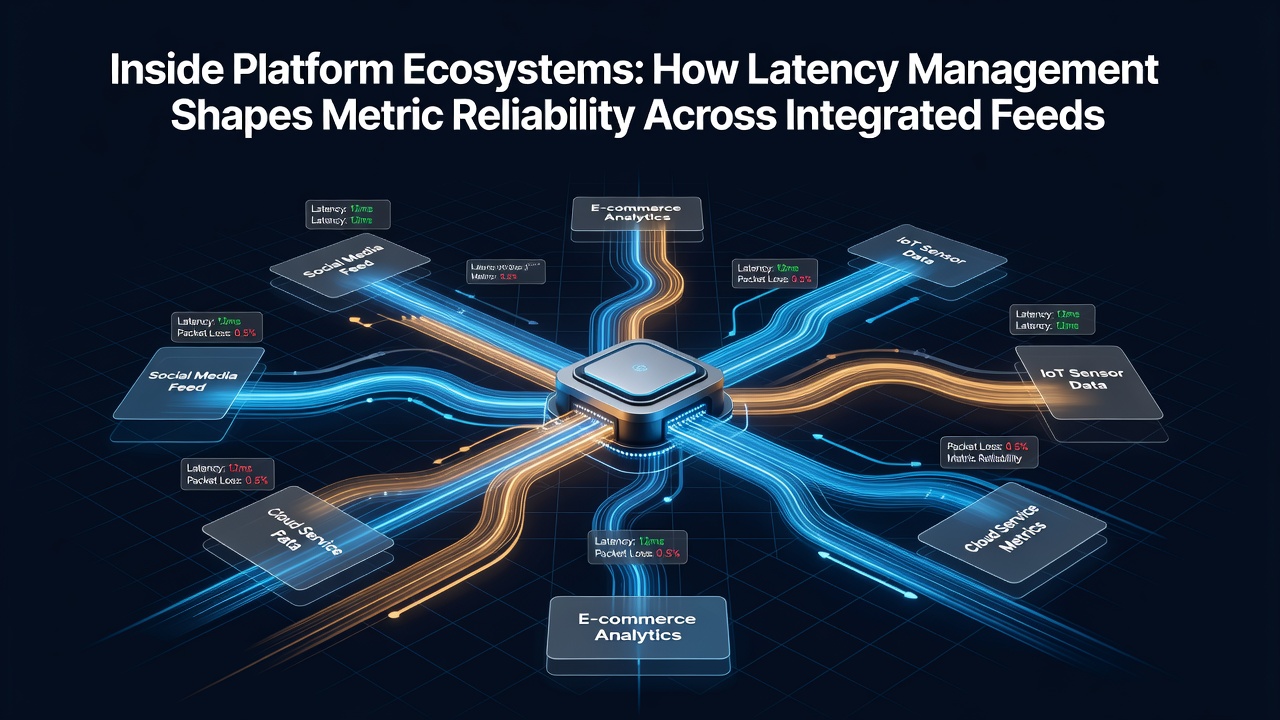
Integrated feeds function as pipelines that pull structured and unstructured data into centralized platforms, where algorithms normalize formats before metrics reach end users. Data shows that feed reliability hinges on synchronization protocols that account for variable packet arrival times, and studies indicate synchronization failures occur most often during peak traffic periods when bandwidth allocation shifts dynamically. Those who maintain these systems report that timestamp alignment across feeds prevents cumulative drift in time-series calculations, while mismatched clocks introduce measurable variance in trend lines.
Latency Management Techniques in Practice
Engineers apply buffering strategies, priority queuing, and predictive prefetching to reduce the gap between data generation and metric delivery. According to findings from the National Institute of Standards and Technology, systems that implement adaptive buffering cut average latency by up to 40 percent in multi-source environments compared with static configurations. Yet the same reports reveal that aggressive buffering can mask underlying feed instability, leading operators to misinterpret smoothed outputs as accurate representations of source conditions. One documented implementation at a North American analytics provider adjusted queue depths in response to real-time jitter measurements, resulting in more stable metric outputs during scheduled maintenance windows.
Effects on Metric Reliability
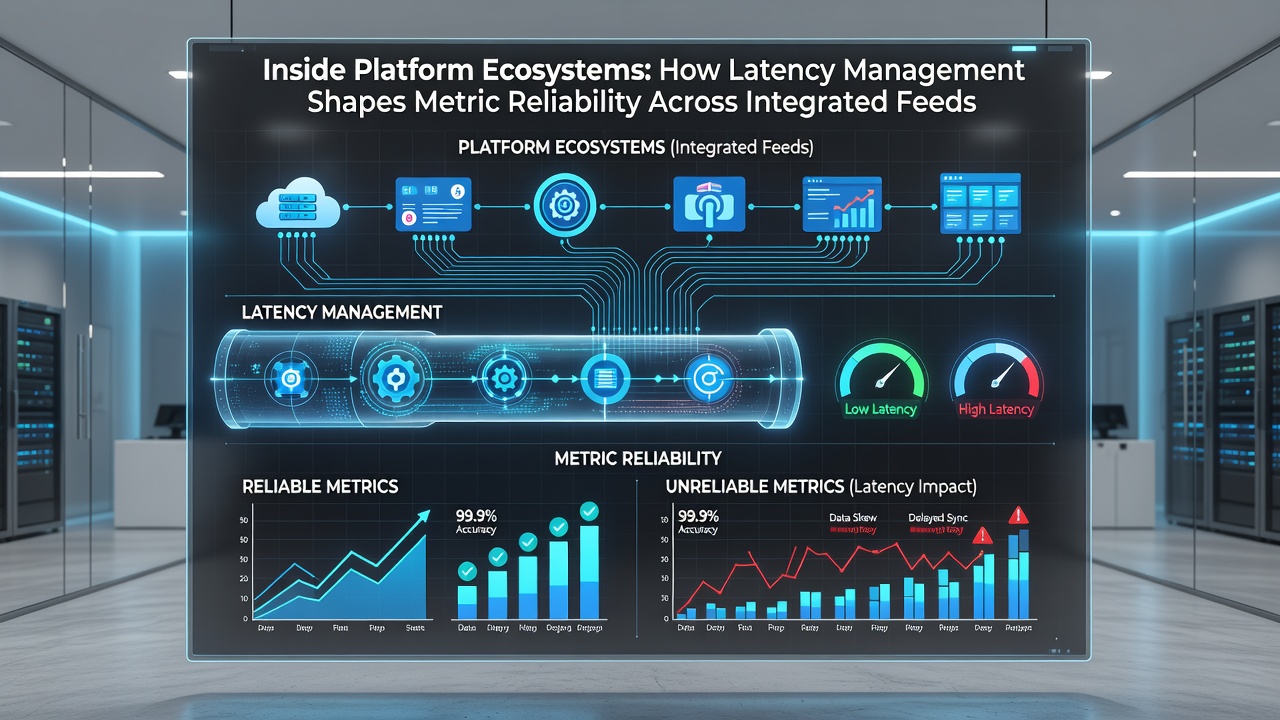
Metric reliability declines when latency exceeds thresholds that the aggregation layer was designed to tolerate, and evidence from academic papers published by the IEEE Computer Society confirms that reliability scores drop sharply once delays surpass 150 milliseconds in high-frequency reporting setups. Analysts observe that percentage-based metrics such as conversion rates suffer more visible distortion than absolute counts because small timing offsets change numerator and denominator pairings. In November 2026, scheduled protocol revisions from several cloud providers are expected to introduce stricter timestamp granularity requirements, which will force platform operators to recalibrate existing latency controls if they wish to maintain current reliability levels.
Cross-Feed Synchronization Challenges
Platforms that combine feeds from third-party APIs with internal telemetry encounter additional synchronization hurdles because external sources rarely expose internal queuing states. Data from the Australian Bureau of Statistics on enterprise data integration projects shows that organizations using hybrid feeds experience 22 percent higher variance in daily metric totals when latency compensation logic remains absent. Those managing such environments often deploy reconciliation layers that compare overlapping data windows and flag inconsistencies before final metrics publish, and this approach has proven effective in reducing downstream reporting errors across multiple documented deployments.
Monitoring and Adjustment Practices
Continuous monitoring tools track per-feed latency distributions and trigger alerts when percentiles exceed predefined bounds, allowing teams to reroute traffic or scale processing resources before reliability metrics degrade. Research conducted at the University of Toronto’s data systems laboratory demonstrates that machine-learning models trained on historical latency patterns can predict reliability impacts up to 30 minutes ahead with over 85 percent accuracy in controlled tests. Operators who adopt these predictive models report fewer incidents of metric divergence during traffic surges, although the models require periodic retraining to reflect changes in feed architecture.
Conclusion
Latency management directly influences the consistency of metrics assembled from integrated feeds, and platform ecosystems that treat synchronization as a core operational function achieve more stable outputs across reporting cycles. Organizations continue to refine buffering, queuing, and predictive techniques as data volumes grow and external feeds proliferate, while upcoming protocol changes in late 2026 will add new constraints that demand further adjustments. The relationship between transmission delays and metric accuracy remains a measurable factor in system design, and ongoing measurement programs provide the data needed to maintain reliability standards.