Jakob Sullivan · 17 September 2026
Adapting Query Techniques for Real-Time Metric Tracking in Competitive Analysis Platforms
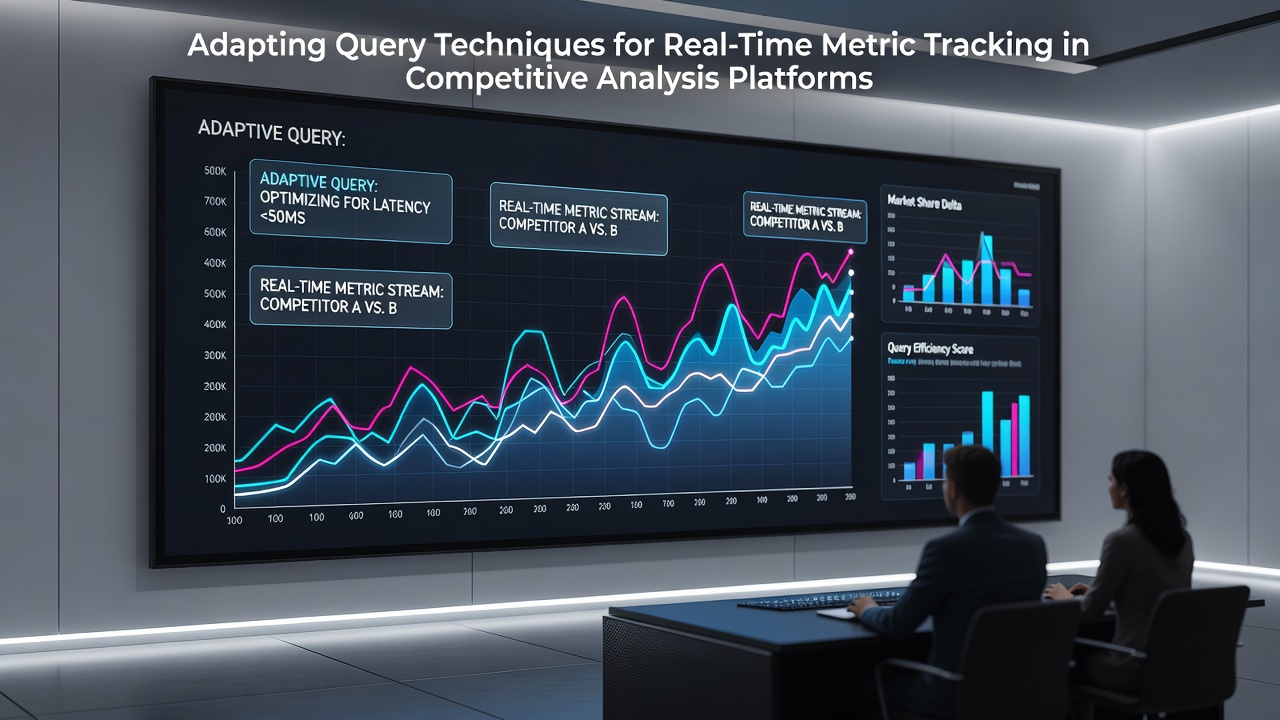
Competitive analysis platforms rely on efficient query techniques to monitor metrics such as market share shifts, pricing changes, and engagement rates across multiple data streams, and adaptations in these methods have become essential as data volumes expand rapidly. Organizations process incoming information from APIs, web crawlers, and third-party feeds while maintaining low latency, which requires shifts from traditional batch processing to streaming architectures that handle continuous updates without full dataset reloads.
Core Components of Real-Time Query Adaptation
Query adaptation begins with the selection of data ingestion methods that support incremental updates, where systems like Apache Kafka or similar event-driven frameworks feed information directly into analytical engines rather than storing raw logs for later processing, and this setup allows platforms to track competitor movements as they occur. Researchers at various institutions have documented how combining windowed aggregations with materialized views reduces computation time by focusing only on recent data segments instead of re-evaluating entire histories each cycle.
Indexing strategies also evolve under real-time demands, with platforms moving toward inverted indexes or columnar stores optimized for time-series data, and these structures enable faster retrieval of specific metric slices such as daily active user counts or keyword ranking positions without scanning unrelated records. Data indicates that hybrid indexing approaches, which blend in-memory caches with persistent storage, cut query response times noticeably when handling thousands of concurrent competitor comparisons.
Handling Data Velocity and Volume Challenges
High-velocity data streams introduce complexities around consistency and accuracy, since metrics must reflect the latest available information while avoiding conflicts from delayed or out-of-order arrivals, and techniques such as watermarking help systems determine when a time window can be considered complete for aggregation purposes. Observers note that query planners now incorporate cost-based optimizations that prioritize frequently accessed metrics, routing simpler lookups through cached layers while directing complex joins involving multiple competitor datasets to distributed processing nodes.
Platforms often integrate predictive pre-computation, where anticipated queries for recurring metrics like share-of-voice calculations are executed in advance during low-load periods, and this method proves useful when competitive events trigger sudden spikes in user requests. Studies from academic sources show measurable improvements in throughput when such pre-computation pairs with dynamic query rewriting that adjusts filters based on current data freshness indicators.
Integration with Broader Platform Ecosystems
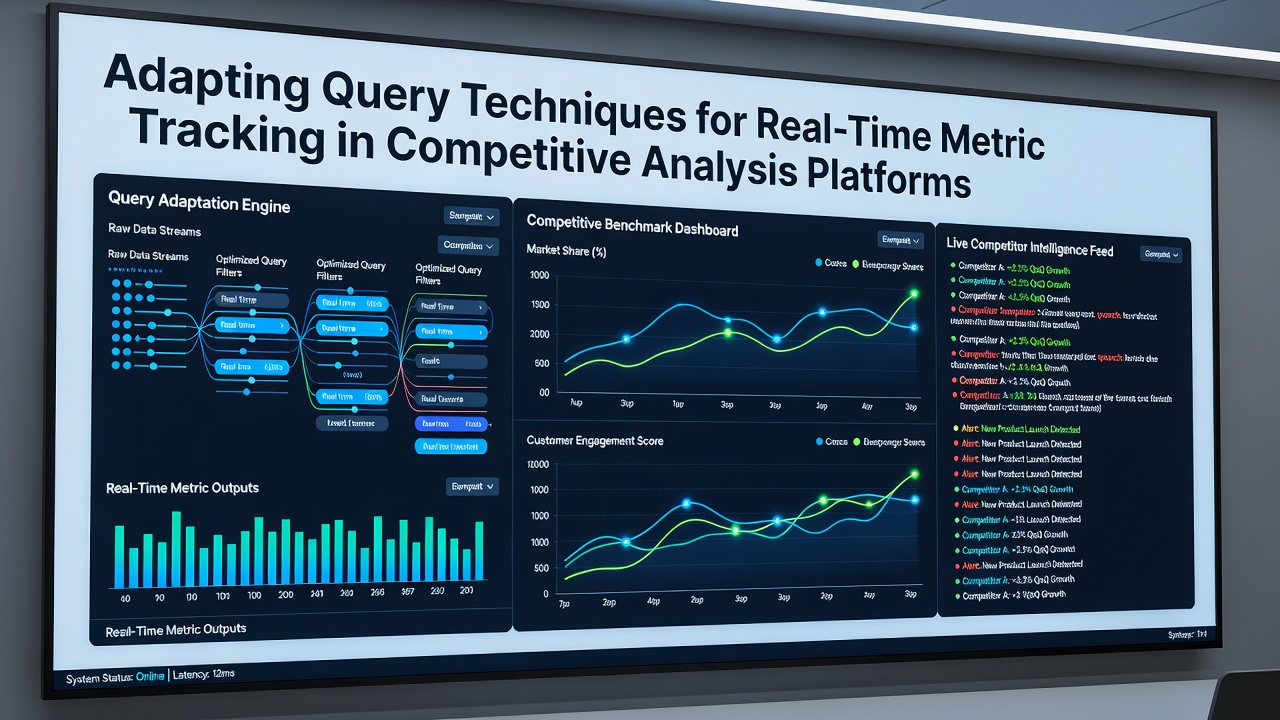
Real-time metric tracking does not operate in isolation, since competitive analysis platforms connect these query systems to visualization tools, alert mechanisms, and export functions that deliver insights to decision-makers across different departments. Engineers adjust query languages to support nested subqueries and lateral joins that pull correlated data points, such as linking a competitor's pricing change to its corresponding social media activity volume, and this capability expands the depth of analysis without proportional increases in execution time.
Security considerations influence query design as well, with row-level access controls and query auditing applied to prevent unauthorized exposure of sensitive competitive intelligence, and regulatory frameworks in regions including the European Union and Canada emphasize data handling standards that platforms must embed directly into their query execution layers. In September 2026 further refinements to international data exchange protocols are projected to require additional adaptations in how cross-border metric queries are validated and logged.
Performance Monitoring and Iterative Refinement
Continuous monitoring of query performance forms a feedback loop that drives ongoing adaptations, where platforms log execution plans, resource consumption, and result accuracy to identify bottlenecks before they impact users, and machine learning models trained on historical query patterns can suggest index additions or rewrite rules automatically. Those who manage large-scale deployments report that A/B testing new query variants against production traffic reveals subtle trade-offs between speed and completeness that static analysis often misses.
Case examples from industry reports illustrate how one analytics provider reduced average query latency by over 40 percent after shifting to adaptive partitioning schemes that rebalance data shards based on metric access frequency rather than fixed time intervals. Such refinements keep platforms responsive even as the number of tracked competitors and tracked metrics grows into the tens of thousands.
Conclusion
Adapting query techniques for real-time metric tracking demands coordinated changes across ingestion, storage, execution, and monitoring layers, and the resulting systems deliver timely competitive intelligence that supports faster strategic responses. Evidence from multiple technical evaluations confirms that platforms investing in these adaptations maintain higher reliability under variable load conditions while meeting emerging compliance requirements across different jurisdictions.